In recent years, the nexus between artificial intelligence (AI) and scientific research has significantly advanced, heralding a new era where complex problems can be tackled more efficiently and innovatively. Intelligent Cleaner Pep Sciences, a forward-thinking research institution, exemplifies how AI technologies are transforming the scientific landscape, leading to accelerated discoveries and enhanced understanding across various domains.
At the core of these advancements lies AI's ability to process vast amounts of data with remarkable speed and accuracy. In fields like genomics, climate science, and materials science, researchers often grapple with an overabundance of data, which can be overwhelming and difficult to analyze using traditional methods. AI algorithms, particularly those involving machine learning and deep learning, enable scientists to uncover patterns and insights that were previously hidden within large datasets. This capability not only fast-tracks the research process but also opens new avenues for investigation that were unimaginable with manual analysis.
Intelligent Cleaner Pep Sciences is leveraging AI to refine its research methodologies, particularly in drug discovery and environmental sciences. In drug discovery, AI models can predict how different drug compounds interact with biological systems, significantly reducing the time and costs associated with developing new medications. By simulating molecular interactions with a high degree of precision, AI helps identify promising compounds much earlier in the development process, which expedites the journey from laboratory research to clinical trials.
In environmental sciences, AI is transforming the way researchers monitor and respond to ecological challenges. By employing sophisticated AI models, scientists at Intelligent Cleaner Pep Sciences can analyze climate data to predict weather patterns, model the potential impacts of climate change, and develop sustainable solutions more effectively. AI-driven algorithms assess historical climate data alongside real-time information from satellites and sensors, enabling more accurate climate models and aiding in the development of strategies to mitigate adverse environmental impacts.
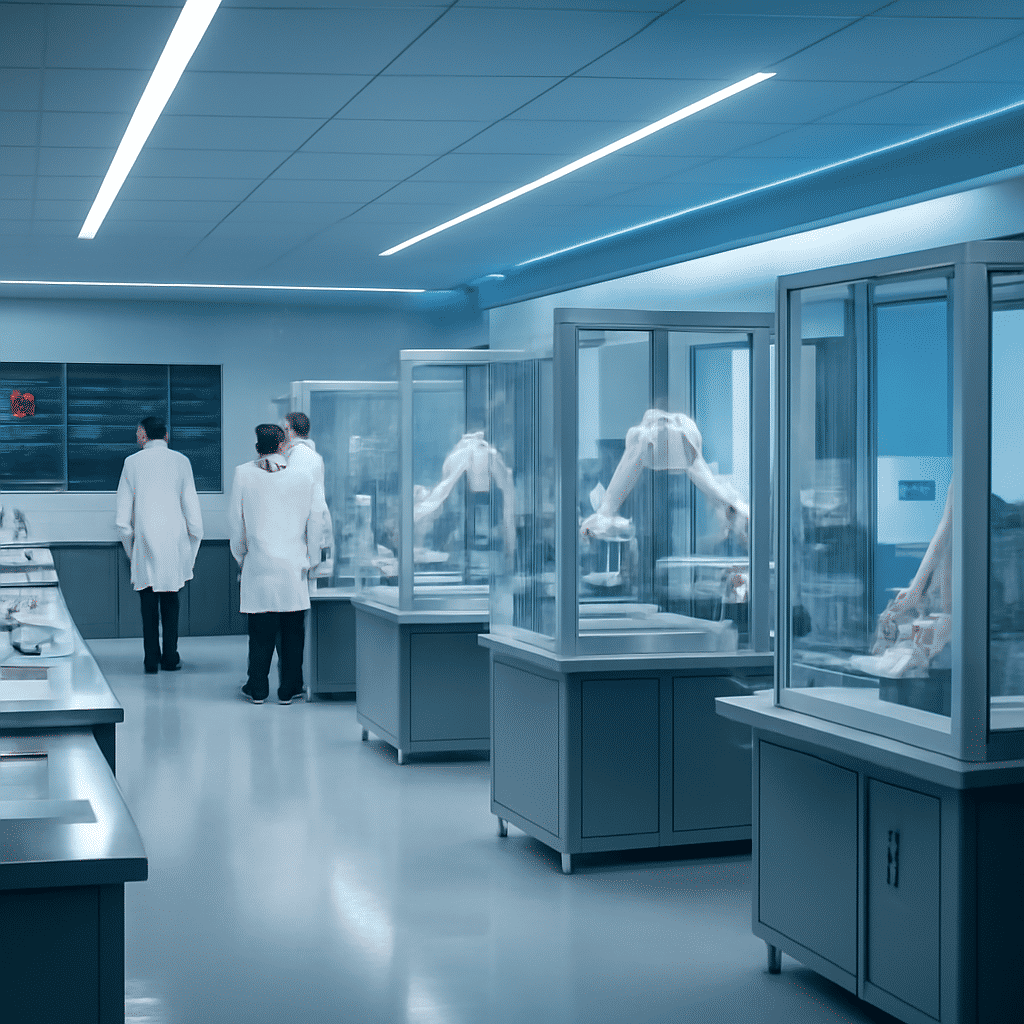
Moreover, AI's integration into scientific research extends beyond data analysis. Intelligent Cleaner Pep Sciences is also exploring AI's potential in automating laboratory experiments. With robotic systems guided by AI, routine lab tasks such as compound synthesis and repetitive assays can be automated, freeing up researchers to focus on high-level problem solving and theoretical advancements. This not only increases productivity but also minimizes human error, enhancing the reliability and reproducibility of scientific findings.
Collaboration between AI experts and domain scientists is key to maximizing AI's impact on research. At Intelligent Cleaner Pep Sciences, interdisciplinary teams work together to tailor AI tools to specific scientific needs, ensuring the technology is applied effectively and ethically. This collaborative approach fosters an environment where innovative ideas can flourish, driving advancements not only in AI but also within the scientific disciplines it supports.
As AI continues to evolve, its role in scientific research is expected to grow, offering even more sophisticated tools for inquiry and discovery. Challenges remain, such as ensuring data privacy and developing algorithms that can explain their decision-making processes. However, with institutions like Intelligent Cleaner Pep Sciences at the forefront, it is clear that the fusion of AI and scientific research holds transformative potential for addressing some of humanity’s most pressing challenges and unlocking new horizons in science.